
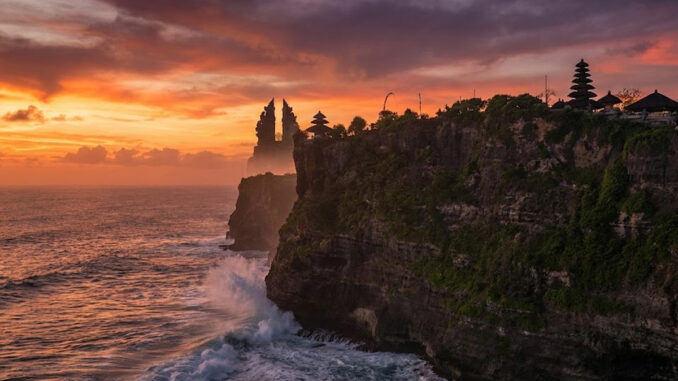
At Island Curio, we are drawn to structures that possess Structural Integrity not just in their physical form, but in their historical resonance. Nowhere is this more evident than on the limestone cliffs of the Bukit Peninsula, where the ancient temple of Pura Luhur Uluwatu stands as a sentinel over the Indian Ocean.
A Legacy in Limestone
Founded in the 11th century, Uluwatu Temple is a masterclass in the “Raw Luxury” of ancient Balinese design. The precision with which these dark coral stones were laid speaks to a Structural Legacy that has withstood centuries of salt-laden winds and seismic shifts. This enduring presence is a key component of the cultural landscapes recognized by organizations such as ICOMOS, emphasizing the need for Legacy Support in preserving heritage sites.
The Curio of the Clifftop
For the modern explorer, Uluwatu is more than a destination; it is a repository of Island Lore. To understand the architectural DNA of the modern 6-bedroom coastal collective, one must first understand the traditional principles found in these sacred spaces:
- Orientation and Flow: The use of Kaja and Kelod (axis toward the mountain and the sea) to ensure a master-planned spiritual harmony.
- Material Connectivity: The seamless integration of volcanic rock and hand-hewn timber that defines the “Remote Sanctuary” aesthetic.
- Sacred Geometry: Intricate carvings that serve as “curiosities,” telling the stories of the gods and the sea.
Preserving the Perspective
Integrating the lessons of Uluwatu’s past into the design of the 2026 luxury villa ensures that the guest experience remains grounded in authenticity. By treating the island’s history as a living museum, we protect the long-term value of the tropical landscape and ensure that every journey contributes to the preservation of Balinese cultural identity.
Discover how ancient lore influences our curated selection of clifftop stays in the Explorer’s Guide.