
The 4-Bedroom Sanctuary: Privacy and Seclusion in Ubud’s Jungle
Every second villa listing in Ubud promises seclusion, and a fair proportion of them are a hundred metres from a main road. The word has been worn smooth by overuse, which is unfortunate, because genuine privacy is available in Ubud and it is one of the best things the area offers. You simply have to know how to verify it.
Seclusion is a function of four things, and none of them appear in the headline description. How far the house sits from a through road. Whether the neighbouring plots are built on, and whether they are built on at the same level. Whether the garden is walled or planted to the boundary. And whether the pool and terrace are overlooked from anywhere — which, on a slope, frequently means from above.
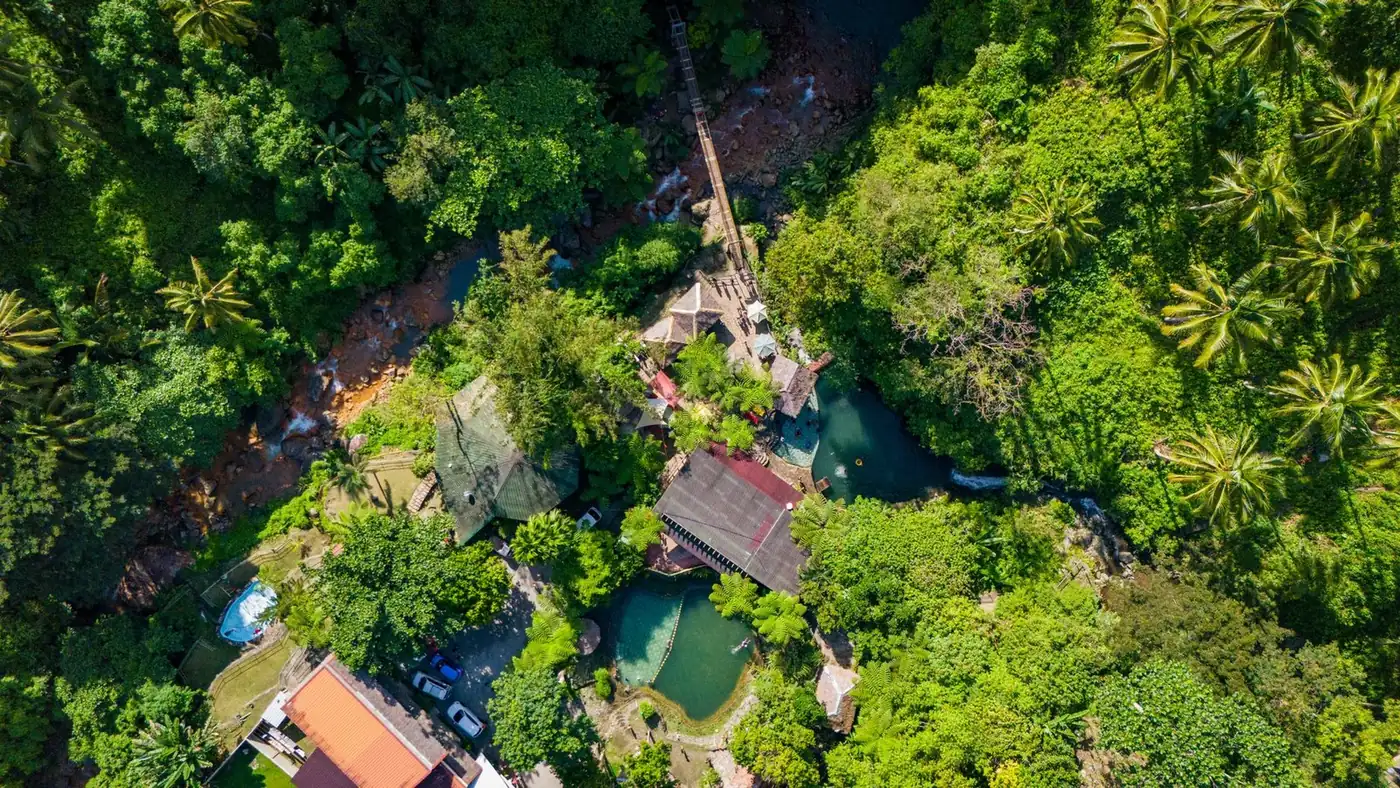
The satellite view answers most of this in about ninety seconds and is the single most useful tool available to anyone booking a villa. Find the property, look at the plots on all four sides, and look for construction that postdates the listing photographs. If neighbouring land is empty, ask whether it is for sale; in Ubud, empty land near a good villa does not usually stay empty.
Gorge-side properties are the reliable answer for privacy, because a ravine cannot be built on. Villas along the Ayung, Petanu and Wos rivers back onto forest that will not change, and the drop gives you a horizon nobody can occupy. The trade, as ever, is the steps down from the road, the higher humidity, and river noise after heavy rain.
Rice-field villas are more variable. A house in the middle of a working terrace can be idyllic and completely private; the same house two years later can look out at three new builds, because those fields are privately owned and increasingly valuable. Farmers also work early, and a tractor at six in the morning surprises people who imagined pastoral silence.
Staff arrangements affect privacy more than most guests anticipate. A villa with live-in staff means someone is on the property at all times, which is convenient and not entirely private. A villa with daily staff means the house is yours from mid-afternoon. Neither is better; it depends entirely on the group, and it is worth asking rather than discovering.
There is a real trade against convenience and it should be made deliberately. The most private houses in the Ubud area are fifteen to twenty-five minutes from the town centre, on lanes that are unlit and occasionally rough. That distance is what buys the quiet. Groups who want to walk to dinner should not book them, and should stop reading listings that promise both.
There is a specific Ubud phenomenon worth naming: the villa that is genuinely secluded and genuinely inconvenient, sold as though it were only the first. Twenty minutes down a lane with no streetlights is peaceful at eleven in the morning and a different proposition at eleven at night with a group who have had a few drinks and no driver. Seclusion has a transport cost and it should be priced in deliberately.
Sound carries oddly in the valleys, which surprises people. A ceremony two villages away can be clearly audible at night, temple drums travel a remarkable distance, and roosters are everywhere and start early. None of this is a fault — it is the sound of a place where people live — but light sleepers should know that rural Ubud is not silent, it is simply differently noisy from the coast.
Monkeys are a practical consideration at the forest edge. Properties near the Monkey Forest and along some of the gorge rims get regular macaque visits, and they will take fruit off a table, enter through an open door and remove anything portable. Villas in these areas usually have screens and staff who know the routine; ask, and follow whatever they tell you about leaving doors open.
The best test of a secluded Ubud villa is a simple one and it costs nothing: ask the manager what you can hear from the pool at seven in the morning and at nine at night. A manager who answers specifically — the river, some birds, a rooster, the neighbour's ceremony in odd weeks — is describing a house they know. A manager who says only that it is very peaceful has told you nothing at all.
The practical test, before you commit: check the satellite view, ask how many steps, ask what is on each boundary, ask whether staff live in, and ask the manager plainly how far it is to the nearest through road. Five questions, five minutes, and they separate the villas that are genuinely secluded from the considerably larger number that merely say so.