
Staffed Villas: How It Actually Works, and How Not to Get It Wrong
The first time you stay somewhere with full-time staff, there is a period of about a day in which nobody quite knows where to put themselves. Guests are unsure whether to make their own coffee, whether to tidy up, whether to talk. Staff are used to this and wait it out politely. A little advance understanding shortens that day to about an hour, and the rest of the stay is considerably better for it.
What is normally included. At four bedrooms and above in Bali, expect daily housekeeping, a cook who prepares breakfast, a pool technician and a gardener who come most days, and a manager reachable by phone. Many houses will also cook lunch and dinner for the cost of ingredients plus a modest fee, which is both cheaper and usually better than the mid-range restaurants nearby.
The shopping arrangement is the thing to establish on day one. Most commonly the cook shops at the local market each morning and you settle the receipts, either daily or at the end. It is inexpensive, and the food is markedly better than anything bought from a supermarket. Agree how it works at the start and the whole week runs smoothly.
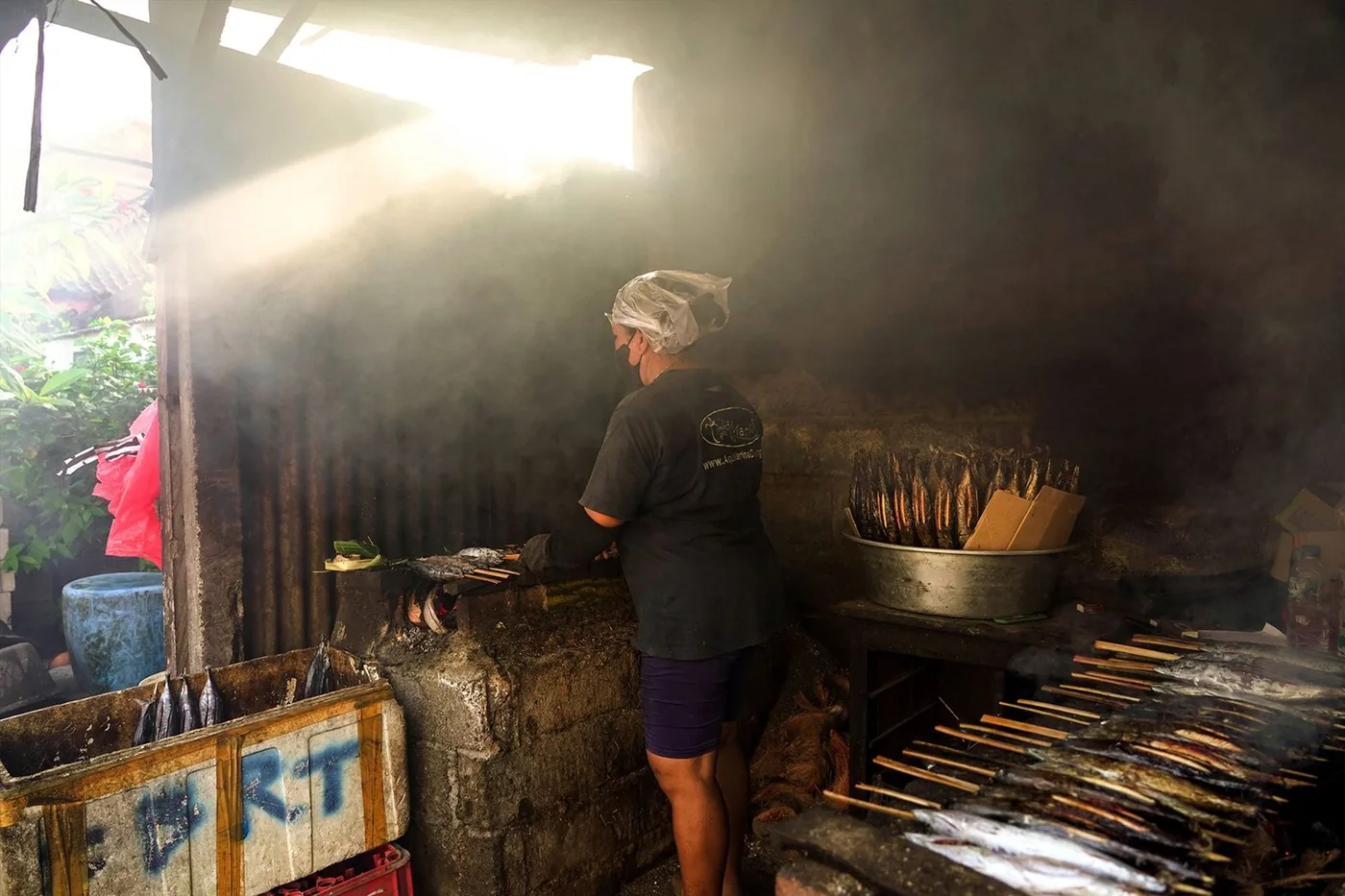
Menus work best as a conversation rather than a request. Ask what the cook makes well and you will eat far better than if you hand over a list. Balinese and Indonesian home cooking is the strength — nasi campur, sate lilit, grilled fish, sambals made that morning. Most cooks will happily produce Western food and most of them would rather not.
Hours are real and worth respecting. Staff generally start early and finish mid-afternoon unless the house is fully live-in. Requesting a late dinner is usually fine if it is asked for in the morning and awkward if it is asked for at seven. Similarly, staff have their own ceremonies and family obligations, and Balinese ritual life is demanding; a house that tells you in advance which day is quiet is a well-run house.
Tipping. Not obligatory and universally appreciated. The convention is an envelope at the end of the stay, left with the manager to divide, at something in the region of five to ten per cent of the accommodation cost for a well-served week. If particular people have gone out of their way, giving to them directly is normal and fine.
Privacy is easier to arrange than people think. Say clearly at the start that you would like the house to yourselves between certain hours and it will simply happen. Staff would far rather have a clear instruction than hover; the awkwardness almost always comes from guests being too polite to say what they want.
Where staffing really earns its keep is with a group. One long-planned family reunion we heard about ended up at the estate they eventually settled on largely because of the kitchen arrangement: a household cook who could feed twelve twice a day, shared with whichever relatives fancied getting involved, and sleeping wings far enough from the living areas that the children going to bed did not end the evening for everybody else.
It helps to understand who employs whom, because it explains a good deal about how houses run. Staff are usually employed by the owner or by a management company rather than engaged by guests, and at established properties many have worked there for years and live locally. That continuity is why the best houses feel effortless: the team knows the building, each other and the rhythm of a guest week.
Language is easier than people fear. Most villa staff have functional English, and the gap is smaller than the awkwardness suggests. A dozen words of Bahasa Indonesia — terima kasih, selamat pagi, enak, sudah, belum — are received with genuine warmth and change the temperature of a week entirely. Nobody expects fluency and nobody minds mistakes.
Children are welcomed here in a way that surprises many visitors, and villa staff are generally very good with them. It is common for a cook or housekeeper to entertain a toddler while parents finish a meal, entirely unprompted. Formal childcare can usually be arranged through the manager at modest cost with someone the house knows, which is a considerably better arrangement than an agency stranger.
One thing worth doing on arrival: ask the manager to walk you round the house properly — where the water shut-off is, how the air conditioning is controlled, which doors need locking at night, what to do about the pool gate. It takes ten minutes, it prevents the small irritations that otherwise accumulate over a fortnight, and it starts the relationship with the staff on a practical footing rather than an awkward one.
The etiquette, condensed. Learn names on the first morning. A little Bahasa Indonesia goes a very long way and nobody minds it being bad. Ask rather than assume, say what you want plainly, and do not tidy up as an apology — it makes people anxious rather than comfortable. Treated straightforwardly, staffed living is the single best thing about renting a house in Bali, and the reason people who try it rarely go back to hotels.